
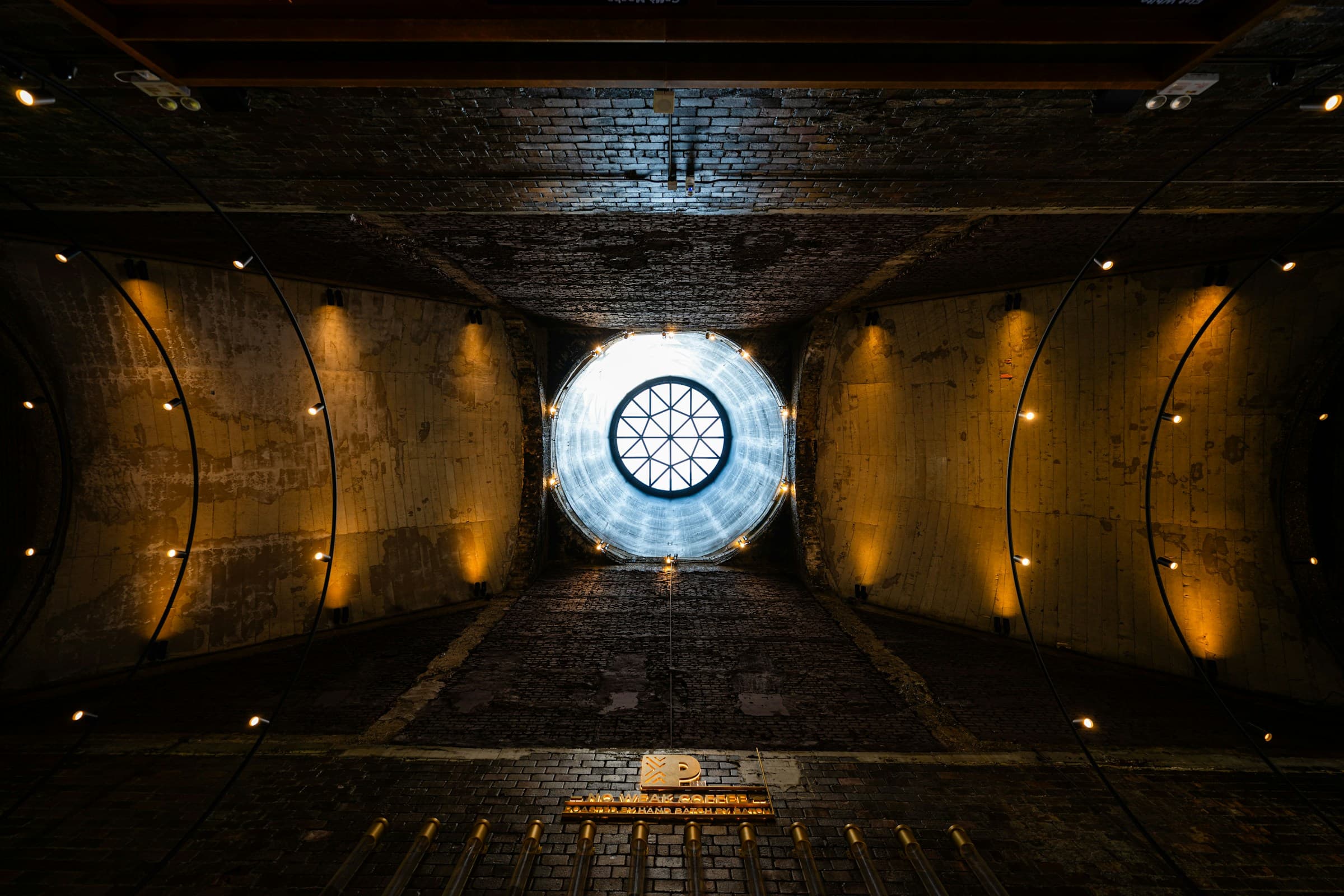
The most important thing happening right now is the collapse of paradoxes.
For most of the twentieth century, the world organized itself around opposites. Art was over here. Science was over there. The old was preserved in museums; the future was built in laboratories. Humans worked. Machines worked for humans. Each of these distinctions felt structural, almost ontological. We built institutions around them — universities split into faculties, companies split into departments, careers split into tracks.
Most of those distinctions are quietly disappearing. Not collapsing into noise, but collapsing into something better: a single reality where the apparent opposites turn out to have been the same thing all along, viewed from different sides.
Art and science were never opposites
The best engineer designs aesthetically. Not because beauty is a bonus on top of correct work, but because beauty is a property of correctness — clean code, elegant architecture, an interface that does not waste a user's attention. The best artist works systematically. Studio practice, gallery operations, the discipline of returning every day to the same canvas: these are the structural commitments of any serious creator. The myth that artists are unstructured and engineers are uncreative is a story we tell to organize undergraduate majors.
We do not believe in the split. The companies we build assume that great products are simultaneously rigorous and aesthetic. The two are inseparable. Skipping either is how mediocre work happens.
The old and the future are the same business
The deepest mistake in technology investing is treating maturity and modernity as opposites. They are not. Some of the most futuristic companies of the next decade are already twenty-five years old; some of the most quickly-aging companies of this decade are five months old.
The discipline that makes a company endure for decades — durable customer love, real margins, a culture that ships, retention that compounds — is the same discipline that makes a company AI-native. The form is new; the foundation is not. Companies that internalize this build for both at once. Companies that treat the old and the future as separate projects build neither well.
The human and the machine, finally collaborating honestly
The conversation about AI right now is mostly about replacement: which jobs go, which professions disappear. That conversation will be looked back on the way we look back on the early industrial-era panics about mechanization. It misses the point.
The interesting future is not human or machine. It is human with machine. A solo founder running an entire back office. A small team serving customers in twelve languages. A teacher with a private-tutor-grade assistant for every student. A craftsperson with an AI partner that handles the operational drag and lets them focus on the part only they can do. The human is more capable; the machine is more useful; neither is in service to the other in the way the previous framing suggested.
That is the version of the future we want to build. Not subtraction. Multiplication.
Why collapsing these paradoxes matters
A world that organizes itself around forced opposites costs more than the divisions themselves cost. It costs the engineers who could have been artists. It costs the companies that could have been built but were not, because the founders saw a wall where there was a doorway. It costs the customers who got worse products from teams that were optimizing one half of a thing that should have been one whole.
The best companies of the next twenty years will be the ones that operate as if the paradoxes are gone. The most useful operators will be the ones who refuse to choose. The most enduring institutions will be the ones built on the assumption that beauty, durability, intelligence, humanity, and ambition belong together.
What this means for the work
Our entire model — the venture studio, the holding company, the operator-led structure, the long horizon — is designed for that worldview. We do not want to be a fund that invests in technology. We want to be a long-term home for companies that are simultaneously rigorous and aesthetic, simultaneously old and new, simultaneously human and intelligent.
We are not trying to be neutral about which side of these paradoxes wins. We are trying to make them stop being paradoxes at all. To collapse them into a single reality where the right question is not “art or science?” but “what does it mean to do this work well?”
That is the world we want to build. The work begins with refusing the false choice.